
Many people use the words “diploma” and “transcript” as if they mean the same thing. They are related, of course, but they serve very different purposes.
A diploma is usually the document that confirms the final outcome: you completed a programme and were awarded a qualification. An academic transcript is the detailed record behind that outcome. It shows the classes, grades, credits, and academic progress that led to the final award.
Understanding the difference makes it much easier to read university diploma and transcript samples and recognise why their layouts can look so different.
The degree certificate is proof of your ultimate achievement.
Diplomas, degree certificates, or graduation certificates are typically issued once a student has fulfilled all academic requirements. Their purpose is straightforward: to attest that the educational institution has conferred a specific qualification.
Such documents generally include the graduate’s full name, the name of the university, the title of the degree, the date of issuance, and the signatures of authorized officials. Depending on institutional policies, the certificate may also indicate honors or academic distinctions and feature elements such as embossed seals, gold-foil detailing, or formal wording like “having satisfied the requirements for…”
Unlike transcripts, diplomas do not typically list individual courses taken; instead, they are designed to present the final academic achievement in a clear and formal manner.
For this reason, diplomas often carry a greater sense of ceremony. Some feature traditional typography, borders, seals, and carefully balanced spacing, while others adopt a sleek, modern aesthetic with minimal ornamentation. Their design reflects both the nature of the qualification itself and the university’s unique visual identity.
The Transcript: A Record of Academic History
An academic transcript contains more detailed information. It does more than simply show the final qualification obtained; it provides a comprehensive record of the student’s academic journey.
A typical transcript usually includes the following:
Course or module titles
Course codes
Credit values
Grades or marks
Semesters or academic years
Grade Point Average (GPA) (where applicable)
Degree classification or final outcome
Explanations of the grading system or academic standing
For this reason, a transcript often resembles an official record rather than a document designed for display. It may span several pages and include tables, columns, reference numbers, and administrative notes.
Transcripts also present information that does not appear on the degree certificate. For instance, they can list specific modules taken each semester, transferred credits, repeated courses, and the date the transcript was printed.
In short, the degree certificate answers the question, “What qualification was obtained?” whereas the transcript answers the question, “What academic work was completed during the course of study?”
Why Their Designs Differ So Markedly
Differences in purpose naturally influence design styles.
Degree certificates are typically intended for display, personal keepsakes, or inclusion in graduation records. Consequently, their design prioritizes visual presentation, featuring formal text, the university emblem, signatures, official seals, and a balanced layout.
Transcripts, on the other hand, must accurately convey a large amount of information; their design focuses on utility rather than aesthetics. While they may include a university emblem or watermark, the core content remains academic data.
Comparing samples of the two side-by-side makes the distinction immediately apparent. Degree certificates often prominently display the university name and the specific degree title in the center of the page, whereas transcripts usually feature a smaller header followed by a detailed list of course modules, grades, and credits.
Variations Across Countries
University diplomas and transcripts often follow local traditions; consequently, their wording and structure vary from country to country.
In the UK, degree certificates typically specify the degree title and classification (such as “First-Class Honours” or “Upper Second-Class Honours”), while transcripts provide a detailed breakdown of course modules and grades.
Australian transcripts usually list course codes, credit points, study periods, and final grades; the accompanying degree certificates tend to be more concise and formal.
In the US, transcripts generally include credit hours and the cumulative Grade Point Average (GPA), whereas degree certificates focus on indicating the degree earned, the student’s name, and the issuing institution.
In Germany, the official degree certificate is known as an Urkunde. It may be issued alongside other academic documents—such as transcripts or diploma supplements—with each document serving a distinct purpose.
It is precisely these differences that make samples of university documents so interesting: while the fundamental concepts are similar, the ways in which countries and institutions present information are unique.
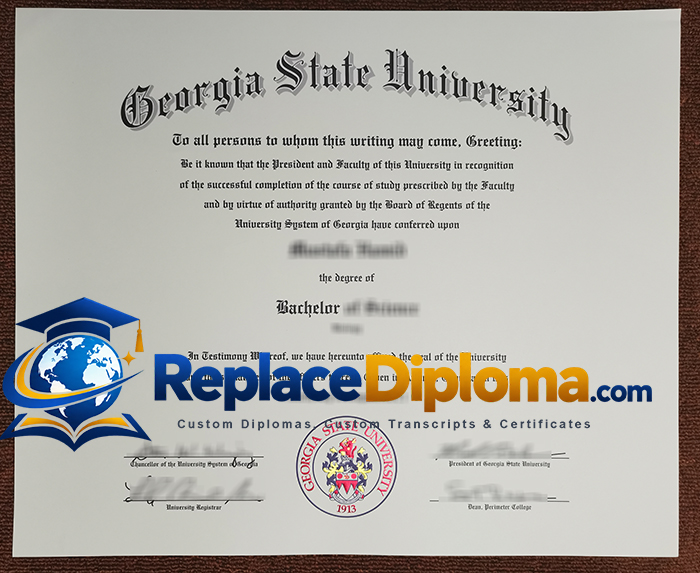
How to Interpret Sample University diplomas and transcripts
When examining samples, it is helpful to first distinguish between a degree certificate and a transcript.
Degree certificates allow one to identify the qualification or degree earned at a glance. Key elements to look for include the degree title, university name, student name field, formal wording, date of issuance, and signature area.
When reviewing a transcript, start with the student information before focusing on the academic record table. This section typically lists course codes, grades, credits, grading scales, and summary data. Some transcripts also include official notes explaining abbreviations or grading policies.
Details should not be overlooked, either. Watermarks, the Registrar’s signature, document numbers, official seals, and institution-specific wording all contribute to the document’s unique style. These details reflect how universities incorporate their own traditional design elements while maintaining the solemnity of academic documentation.
Understanding the Distinction
Degree certificates and transcripts are usually requested for different purposes and occasions. A degree certificate is typically required to prove that a degree has been awarded, whereas a transcript is needed to provide a comprehensive record of academic performance.
For graduates requiring official copies, the safest approach is to contact the university’s Registrar’s Office or Student Records Department directly. The institution can advise on which document is appropriate and outline the specific application process.
Understanding this distinction is also valuable for collectors, designers, and those interested in the layout of academic documents. A degree certificate represents the final milestone of an academic journey, while a transcript documents the entire educational path taken to achieve that milestone.
Once the specific purpose of each document is understood, their distinct design styles appear logical and complementary.